
Best Times to Live Bet College Football
Published on: August 7, 2024
Updated on: August 19, 2026
Category: Advice & Tips
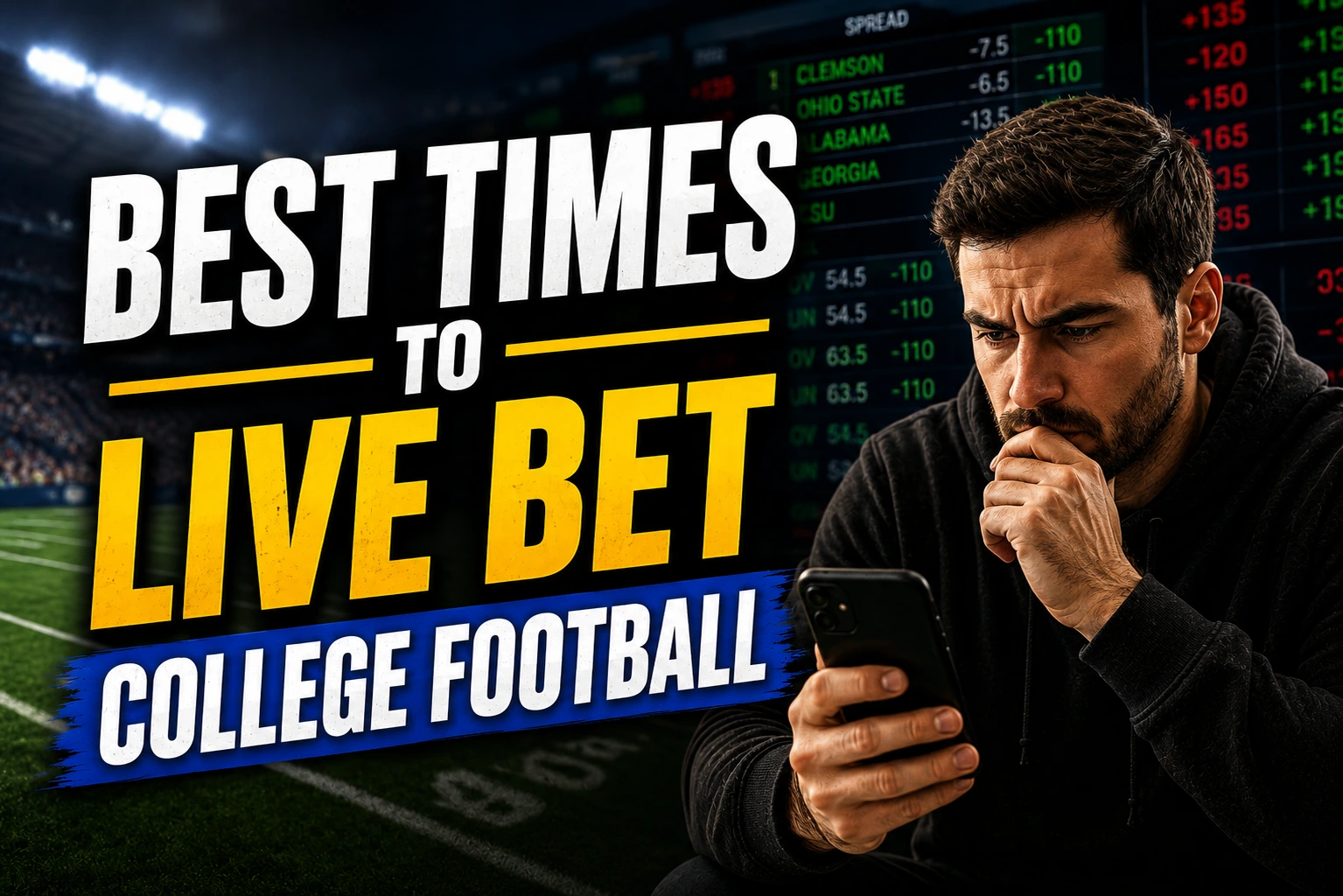
The following post takes a closer look at the best times to live bet college football.
Are you wondering when the best time is to live bet on college football? While there is no single perfect moment to place a wager, some situations tend to offer better value than others.
Read: Lou Groza Award Watch List
Related: Fred Biletnikoff Award Watch List
Knowing when those opportunities appear can be just as important as knowing which team to back. Understanding the timing behind live betting can make all the difference between winning and losing.
Here’s what you need to know.
Overview
Unlike pre-game betting, live betting allows the odds to change throughout the game as the action unfolds. Every touchdown, turnover, injury, and momentum shift influences how sportsbooks adjust their numbers in real time.
Many bettors focus almost entirely on the scoreboard when evaluating live betting opportunities. In reality, the score is only one piece of the puzzle, and it does not always reflect how evenly matched the teams have been.
Certain moments during a game are more likely to create temporary pricing inefficiencies than others. Recognizing these situations can help you better understand why some live betting opportunities stand out while others are simply market noise.
Early First Quarter
The opening minutes of a college football game often produce some of the best values in live betting.
When a heavy underdog scores first, the market frequently reacts as though the balance of the game has changed dramatically, even though there is still plenty of football remaining.
Those early points sometimes come from unusual circumstances rather than sustained success. A kickoff return for a touchdown, a short field after a turnover, or a broken coverage can create an early lead without proving that the underdog is the better team.
This is one of the few stages of the game where the scoreboard and the actual matchup can temporarily drift apart. If the favorite still holds clear advantages in talent, depth, and coaching, the adjusted live line may provide more value than the original pre-game number.
After Scoring Turnovers
Few plays move a live betting market faster than a defensive touchdown.
An interception returned for a score or a scoop-and-score instantly changes the margin while creating the impression that one team has seized complete control.
The scoreboard changes immediately, but the underlying game often has not. An offense may have been moving the ball consistently before making one costly mistake, and that single play can outweigh several successful drives in the eyes of the betting market.
Defensive touchdowns are also difficult to predict and even harder to repeat. Since they often result from isolated mistakes rather than sustained defensive dominance, they can create short-lived opportunities before the market settles back toward the true flow of the game.