

Sports Betting Kiosks and How They Work

Published on: December 26, 2021

Updated on: August 27, 2026

Category: Advice & Tips
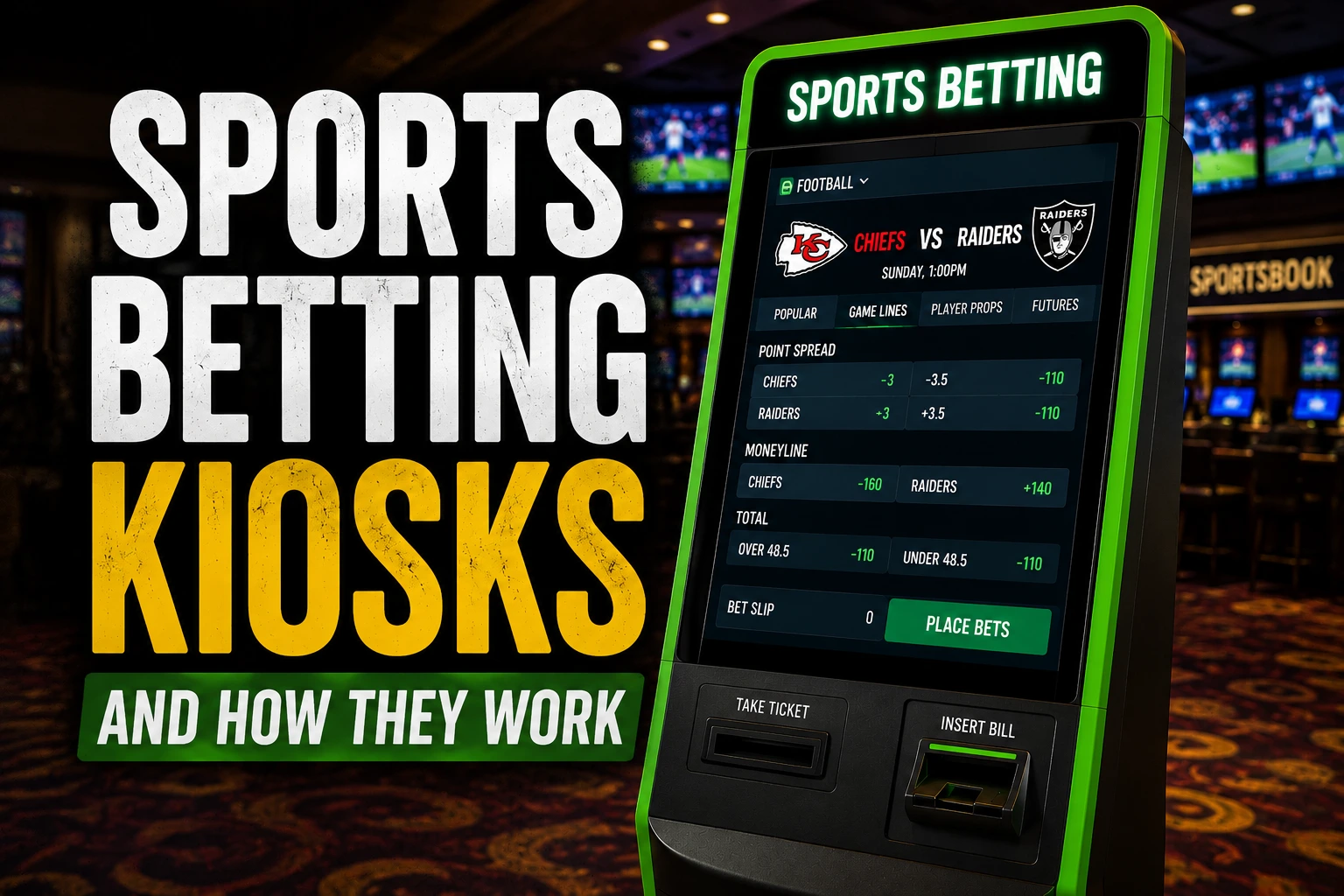
Sports betting kiosk in a Las Vegas sportsbook with betting odds displayed on screen and text reading Sports Betting Kiosks and How They Work.

The following post explores sports betting kiosks, where they can be found, how they work and why bettors use them.

Sports betting kiosks have become a familiar part of the sports betting environment, particularly in Nevada. They can be found inside casinos and sportsbooks, but they also turn up in places where you might not expect to see a sports betting operation, including bars, taverns, grocery stores and convenience stores.

Read: List of Sports Betting Terms

Related: Pitfalls of Buying Sports Betting Picks

Kiosks aren’t particularly complicated. If you have ever used an ATM or self-service checkout machine, you probably won’t need much instruction to figure one out. Their appeal is really about convenience, allowing bettors to place wagers themselves without having to wait in line or interact with a ticket writer.

Here’s everything you need to know about sports betting kiosks.

Overview

Sports betting kiosks are self-service terminals that allow customers to place sports wagers without going to a sportsbook counter. The available features vary depending on the sportsbook operator, jurisdiction and location, but a typical kiosk displays sporting events and betting markets and allows the bettor to select a wager and enter the amount they want to bet.

Depending on the operator, kiosks may also be used for other sportsbook transactions. Some require a player’s card or sportsbook account, while others may allow bettors to use cash, vouchers or other approved funding methods. Because kiosk technology isn’t standardized across the industry, the experience can differ considerably from one location to another.
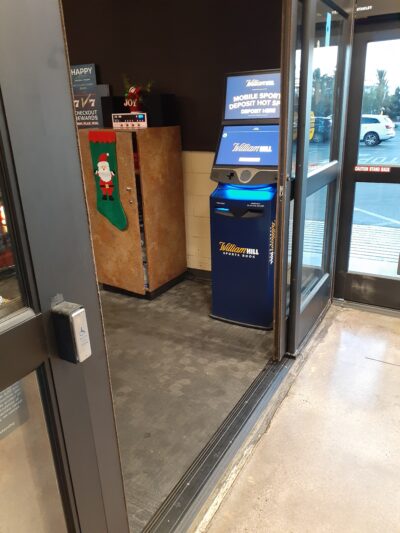
Grocery Store Sports Betting Kiosk - Square Bettor

Pictured: Sports betting kiosk at Las Vegas grocery store.
Where to Find Sports Betting Kiosks

Nevada has one of the most extensive networks of sports betting kiosks in the United States. In Las Vegas, they can be found throughout casinos and sportsbooks, but they aren’t limited to traditional gaming properties.

Licensed sports betting kiosks can also be found in bars, taverns, restaurants, grocery stores and convenience stores. This makes Nevada’s sports betting environment somewhat different from markets where wagering is primarily associated with a casino sportsbook or mobile betting application.

For visitors to Las Vegas, kiosks can be especially convenient because a bettor doesn’t necessarily have to make a trip to a large sportsbook to place a wager. A kiosk may be located elsewhere on the property or at a nearby establishment.

Outside Nevada, the availability of sports betting kiosks depends on state regulations and the sportsbook operators serving that market.

Why Use a Sports Betting Kiosk

The primary reason to use a kiosk is convenience. If you already know what you want to bet, there may be little reason to wait for a ticket writer to enter the wager for you. A kiosk allows you to select the event, enter the wager and complete the transaction yourself.

This can be particularly useful when a sportsbook is busy. Lines can become longer shortly before major sporting events, and a bettor making a straightforward wager may be able to avoid the wait by using a kiosk.

Kiosks can also make sports betting available in locations that don’t have a traditional sportsbook counter. A bar or grocery store, for example, may have a sports betting kiosk even though it doesn’t have the staff or physical space associated with a full sportsbook.

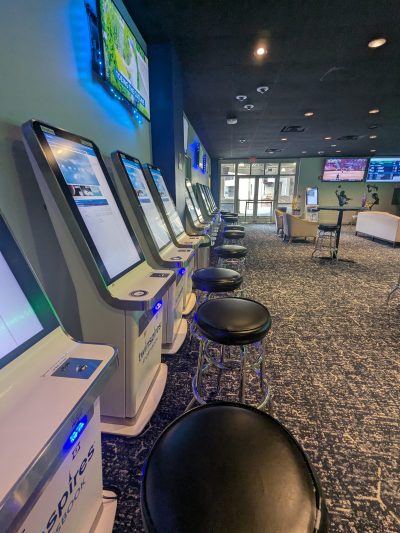
Sports Betting Kiosks with Stools - Blog - Square Bettor

How Sports Betting Kiosks Work

There isn’t much mystery to using a sports betting kiosk. The machine generally guides you through the process of selecting a sport, finding the event you want to bet and choosing the type of wager. You then enter your stake, review the selections and confirm the transaction.

The exact interface depends on the sportsbook operator. One kiosk may look quite different from another, but the basic process is generally the same. Bettors can typically find familiar wagers such as point spreads, moneylines and totals, with additional betting markets available depending on the sport and operator.

Some kiosks are also connected to a player’s sportsbook account or loyalty program. The requirements vary by location, so bettors shouldn’t assume that a kiosk at one property will operate exactly the same way as one at another.

What Can You Bet at a Kiosk

The selection of wagers available at a kiosk depends on the sportsbook and the particular machine. Common betting options include moneylines, point spreads and totals, while some kiosks offer parlays, futures, props and other specialty wagers.

Live betting availability can also vary. Some operators offer extensive in-game wagering through their kiosks, while others may provide a more limited selection than their mobile betting platforms.

The simplest approach is to check the betting menu on the kiosk itself. If a particular event or wager isn’t listed, it may not be available through that machine.

Betting Limits

One potential disadvantage of betting at a kiosk is that wagering limits can be lower than those available at the sportsbook counter. The maximum wager isn’t necessarily the same everywhere and can depend on the sportsbook, location, event and type of bet.

For most recreational bettors, this isn’t likely to be an issue. Someone placing a $20, $50 or $100 wager will generally have little reason to be concerned about a kiosk’s maximum bet. Bettors looking to make substantially larger wagers may find that the sportsbook counter is a better option.

Limits can also be different for different types of wagers, so a kiosk’s maximum wager shouldn’t necessarily be assumed to apply to every betting market.

Betting Tickets

Traditional sports betting kiosks generally produce a physical betting ticket once a wager has been accepted. That ticket serves as proof of the wager and is needed to collect a winning payout.

It’s worth checking the ticket before leaving the kiosk to make sure the wager matches what you intended to place. Pay particular attention to the teams or players, bet type, odds and wager amount.

Most importantly, keep the ticket safe. A physical sports betting ticket is essentially cash if it represents a winning wager, and losing it can create significant complications when it comes time to collect your money.

The process for cashing a winning ticket varies by sportsbook operator and jurisdiction. Some tickets can be redeemed at a sportsbook counter or other authorized location, while certain operators may provide additional options.

Kiosks vs. Sportsbook Counters

Kiosks and sportsbook counters serve much the same basic purpose, but each has advantages depending on what you’re trying to accomplish.

A kiosk makes the most sense when you already know what you want to bet and simply want to get the wager placed. You don’t have to wait for a ticket writer, and you can handle the transaction yourself. For a straightforward wager, that can make the process considerably faster.

The sportsbook counter is more useful when you have questions, need assistance with a transaction or want to place a larger or more complicated wager. A ticket writer can also help if something goes wrong with the transaction or you aren’t sure how a particular wager works.

For many bettors, there’s no reason to choose one method exclusively. A kiosk can be convenient for routine wagers, while the sportsbook counter remains useful when you need personal assistance.

Sports Betting Kiosk Hours

Kiosk availability varies by location. Many machines are available for extended hours and some operate around the clock, but that doesn’t mean every kiosk will always be available.

Kiosks can be taken offline for system maintenance, software updates, technical problems or other reasons. Sportsbooks can also have their own schedules and restrictions governing when particular wagering functions are available.

If you’re planning to make a last-minute wager, particularly at a location that isn’t a traditional sportsbook, it’s worth confirming that the kiosk is operating before relying on it.

One Comment

  1. Eric May 20, 2025 at 9:03 pm - Reply

    I’m still a novice with the kiosk machine don’t quite have it down just yet.

Leave A Comment